Skills get people hired. Values decide if they stay.
Most bad hires were not bad at the job. They clashed with how the team works: how decisions get made, how mistakes get handled, what counts as done. The culture fit test turns your actual values into statements and scores every candidate's alignment, before the offer.
- Your five values, not a generic list from a textbook
- Twenty concrete work statements, scored per value
- A radar profile on the same report as skills and interviews
Values alignment · Jasmine M.
91% alignedYour values, twenty statements, scored per candidate.
5
values, defined by you or drafted by AI from your JD
20
concrete statements, four per value
5 min
for a candidate to complete
91%
alignment reads at a glance on the radar
How it works
Three steps, zero busywork
Name how your team works
Customer first, ownership, bias for action, whatever is true for you. AI drafts values and statements from your job description and company profile; you edit until they sound like your team.
Candidates respond to statements
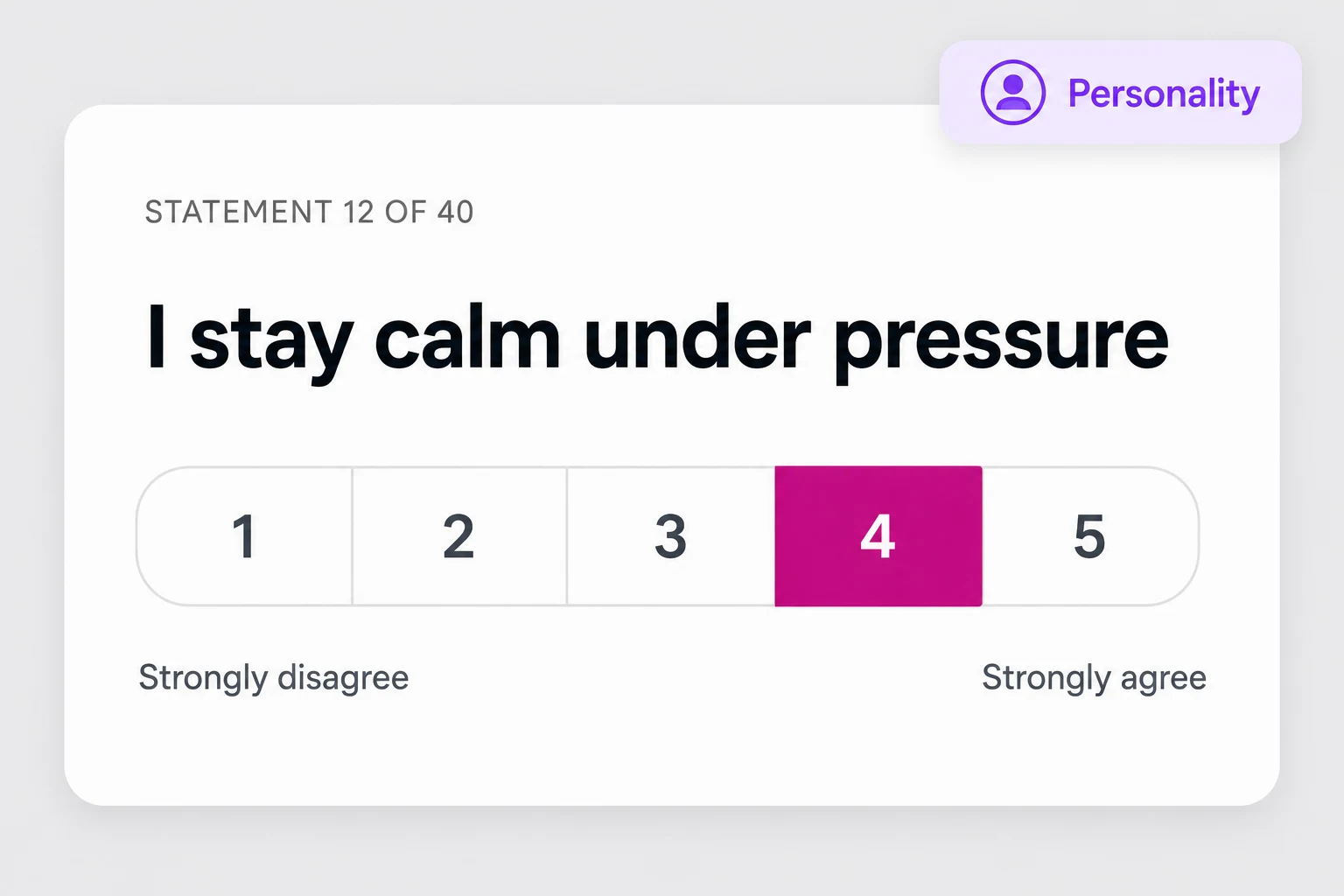
Not do you value integrity, but I report my numbers accurately even when they look bad. Concrete statements about real work, five minutes end to end.
Alignment lands on the report
A radar across your five values, a bar per value, and every statement response underneath. Compare shapes across your shortlist before the first interview.
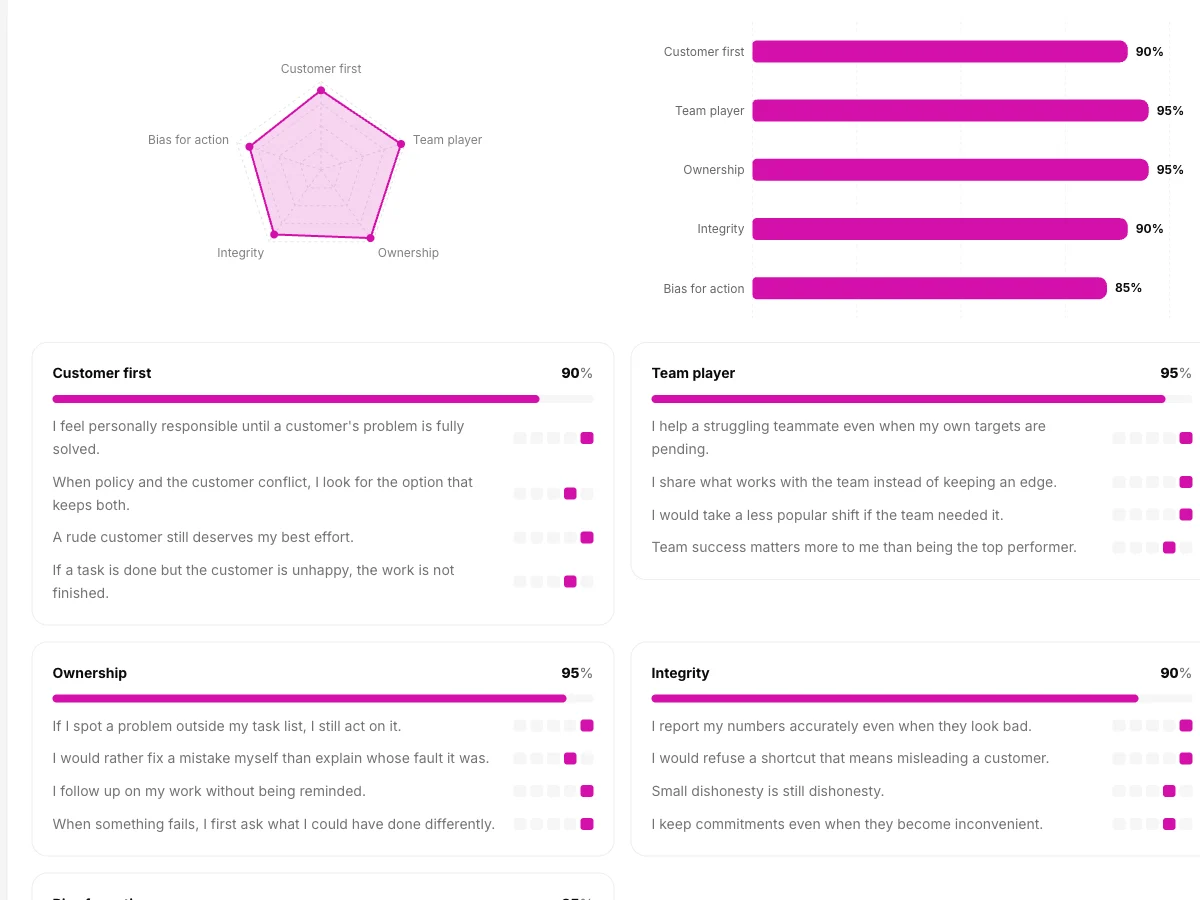
Alignment mapped across five values and twenty statements, on every candidate's report.
Why it works
Culture, measured instead of vibed
Your values, made falsifiable
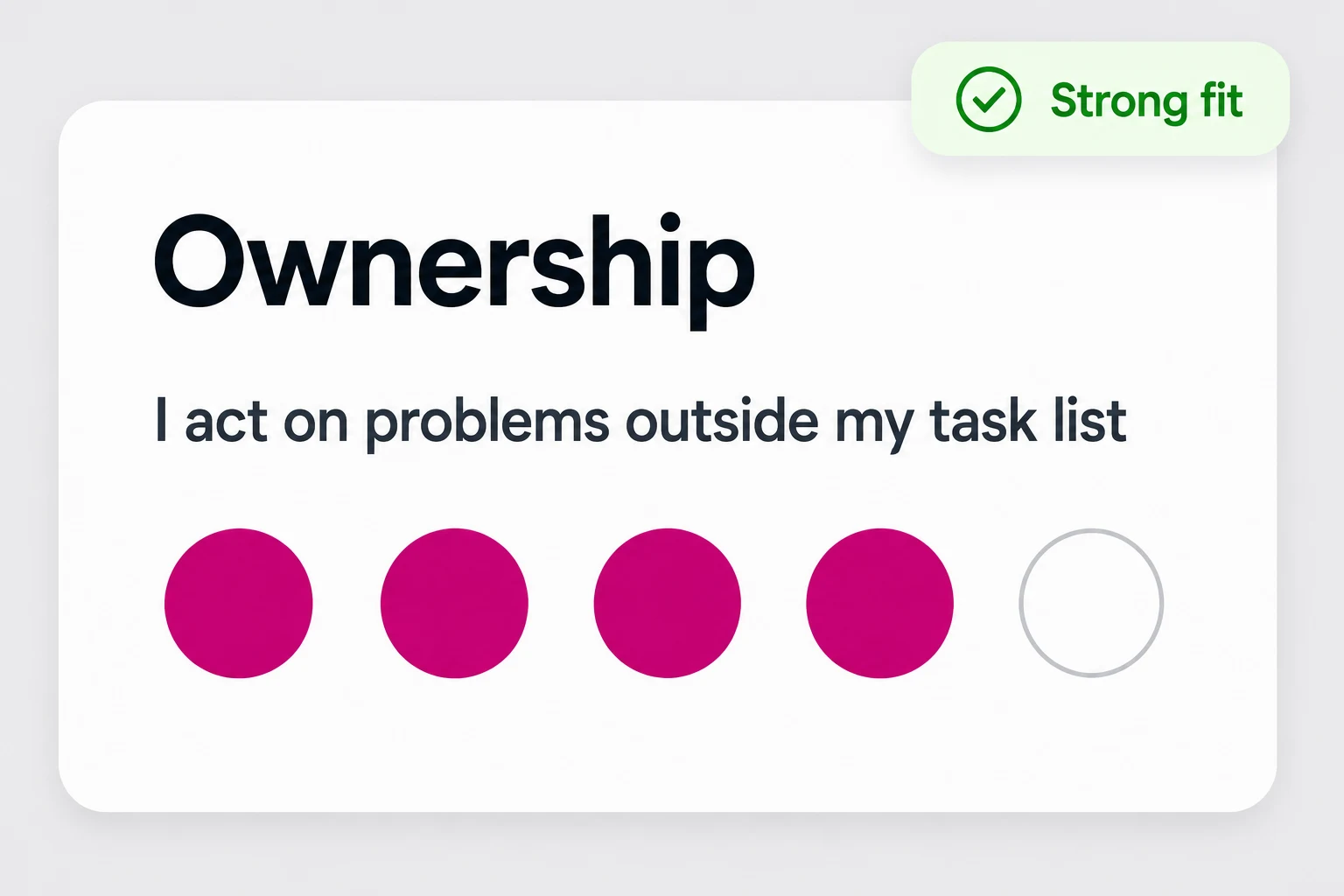
A value like ownership means nothing until it is a statement someone can disagree with: I follow up on my work without being reminded. Four statements per value make each one measurable, and make your culture legible to candidates too.
A shape, not a score to pass
The radar shows where a candidate aligns and where they differ. A 85 on bias-for-action next to a 95 on integrity is information, not a verdict: maybe that is exactly the counterweight your team needs.
Kills the culture-fit coin flip
Without data, culture fit in a debrief means I liked them, the most bias-prone sentence in hiring. With per-value scores on every candidate, the conversation becomes she is strongly aligned on customer-first, and that is a discussion worth having.
Same statements, every candidate
Everyone responds to the identical twenty statements, scored the same way. Structured beats gut feel on both accuracy and fairness, and the report keeps the evidence attached.
One assessment link
Mix it with the other five tools
Candidates get a single link. Every signal lands on one ranked report per candidate.
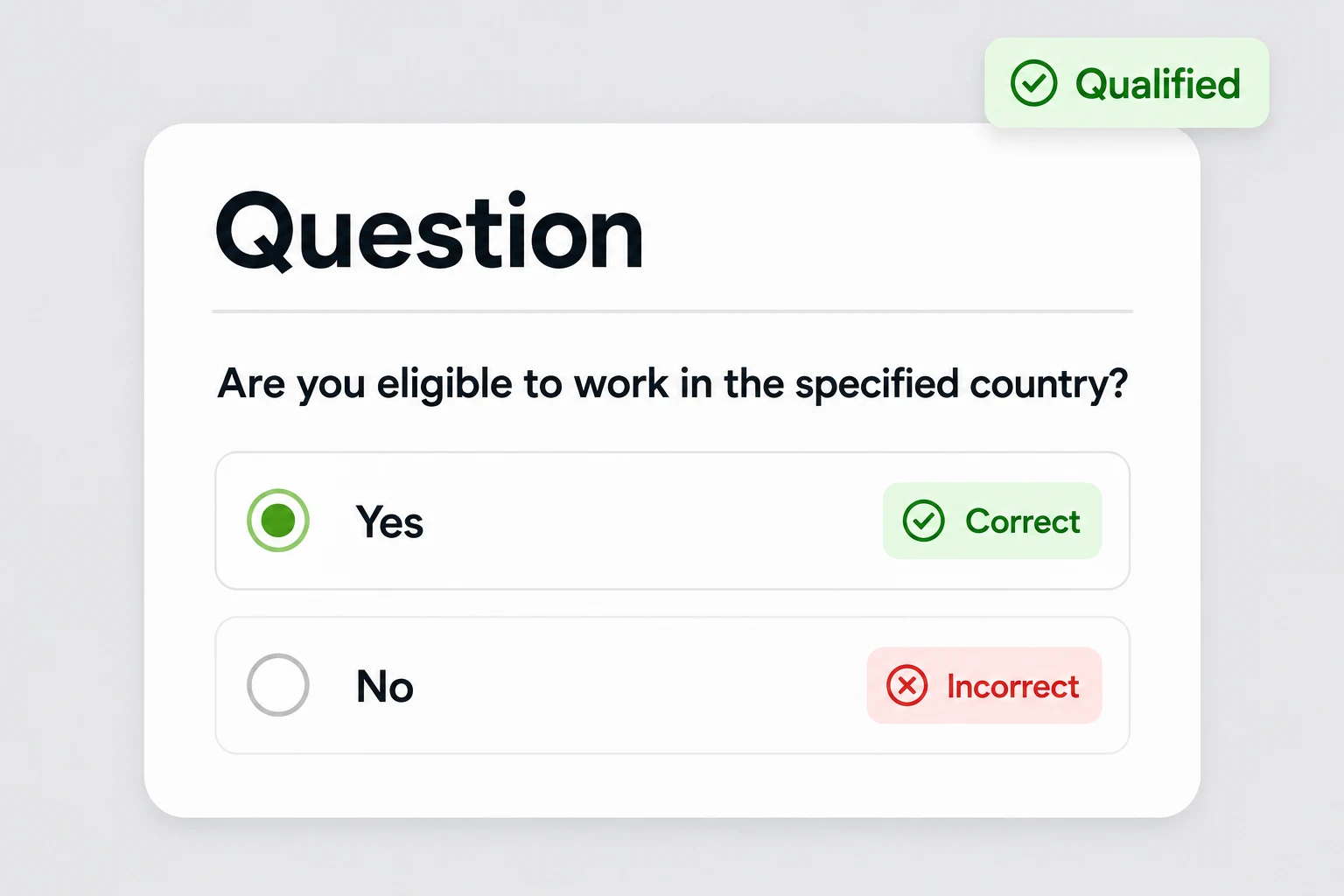
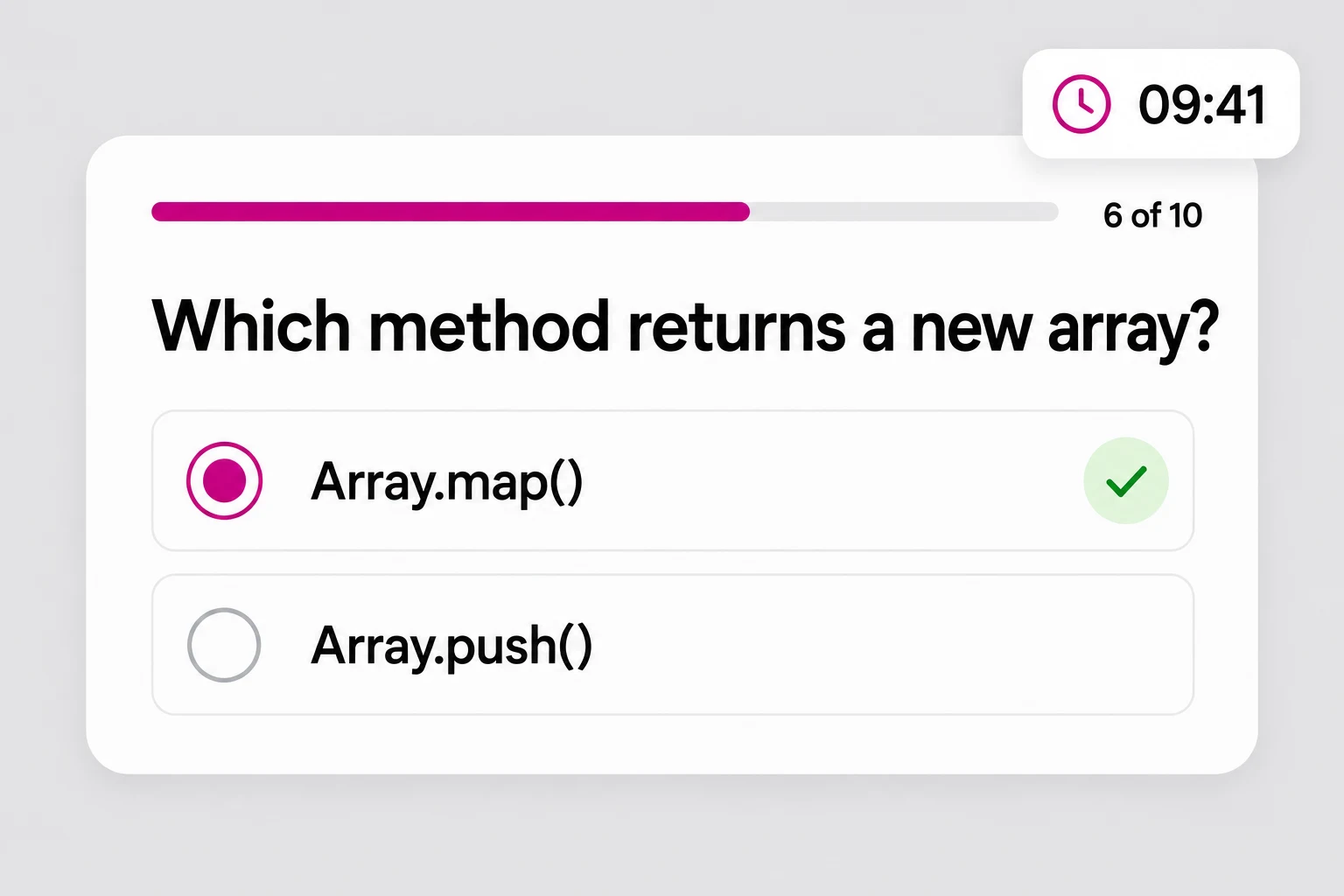
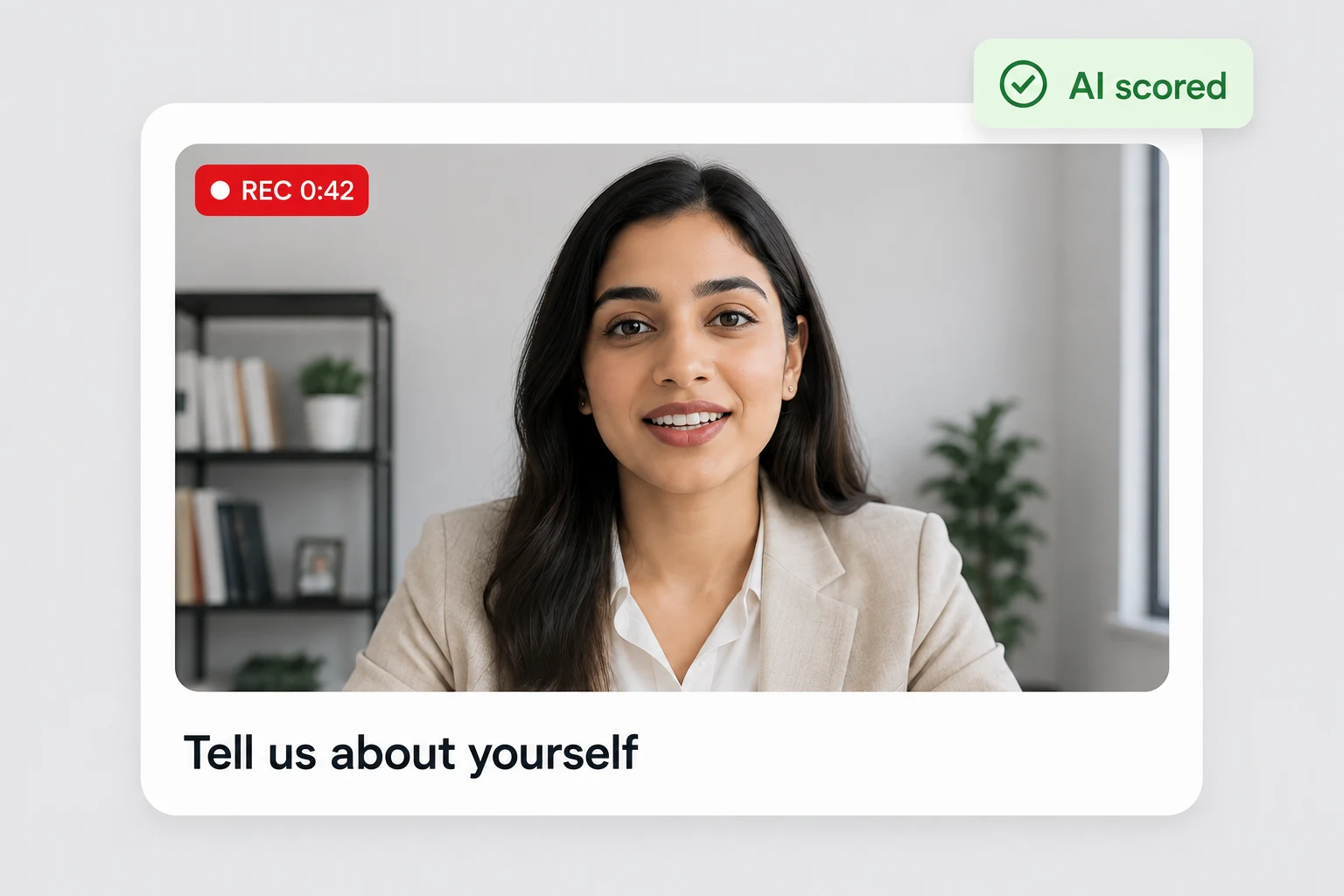
Running a cultural fit assessment without guessing
What a culture fit assessment measures, how to write values a candidate can actually disagree with, and how to read alignment next to skills rather than in place of them.
01What a cultural fit assessment measures
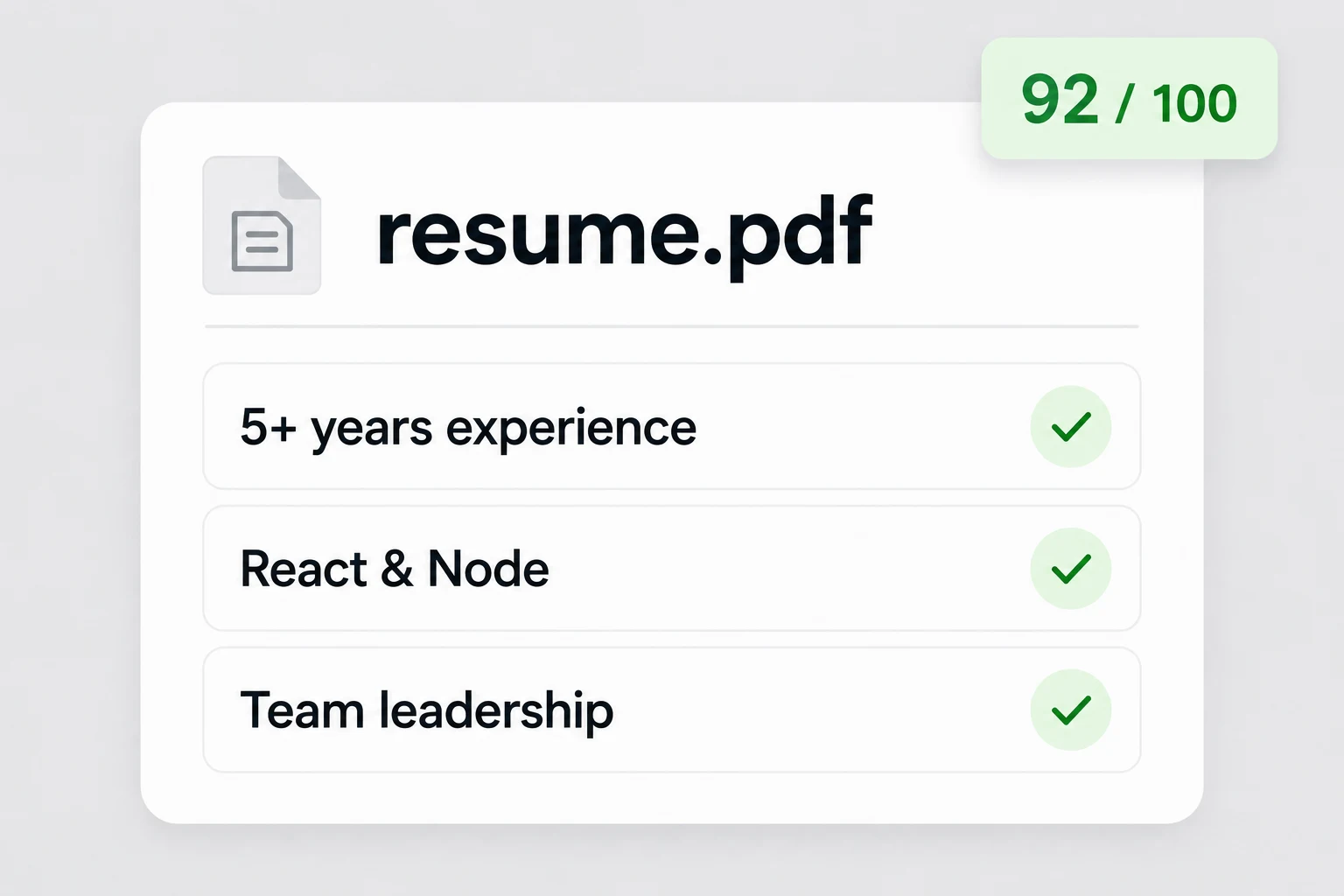
A cultural fit assessment measures how closely a candidate's working preferences line up with the way your team actually operates: how decisions get made, how mistakes are handled, what counts as finished. It is not a personality test and it is not a test of whether you would enjoy a drink with the person. Every candidate responds to the same twenty statements, each one tied to a value you defined, and the result is a per-value profile rather than a single pass mark. That profile sits on the same report as skills tests, video answers and resume scores.
02Why culture fit fails when it is not measured
In most hiring debriefs, culture fit is the sentence people reach for when they cannot say what is wrong. It is the least examined judgement in the room and the one most likely to be carrying something else: the candidate went to a different university, speaks with a different accent, does not socialise the way the team does. Naming your values and scoring against them does not remove judgement. It makes the judgement visible, which is the part that lets someone challenge it.
03Writing values a candidate can disagree with
A value is only measurable once it is a statement someone could reasonably reject. Integrity is not measurable. I report my numbers accurately even when they look bad is measurable. Ownership is not measurable. I follow up on my own work without being reminded is measurable. Four statements per value, written about real work rather than abstractions, is what turns a wall poster into an assessment. If you cannot imagine a good candidate disagreeing with a statement, it is not telling you anything.
04Where the values come from
You write them, or the AI drafts a starting set from your job description and company profile and you edit until they sound like your team rather than a textbook. Five is the working number. Fewer than that and the profile is too coarse to distinguish candidates; many more and you are asking candidates to respond to statements that overlap, which produces a shape that looks precise and is not. Use the same five values across every role in the company, so profiles are comparable between hires.
05Reading the profile as a shape, not a score
The report shows a radar across your five values, a bar for each, and every statement response underneath. Read it as a shape. A candidate strongly aligned on customer focus and weakly aligned on bias for action is telling you something specific about how they will work, which may be exactly the counterweight a fast and careless team needs. A single alignment number would have hidden that. Read the statements behind any value that surprises you before it affects a decision.
06Culture fit or culture add
The two readings use the same data. If you are hiring for fit, you are looking for a profile close to your team's. If you are hiring for add, you are deliberately looking for the value where the candidate differs, because the team is weak there. What the assessment prevents in both cases is the version where nobody says which of the two they are doing, and fit quietly means familiar. Decide which you want before you open the shortlist, not after.
07Where it fits in the process, and what it costs
After the skills test, alongside the recorded video answers, and before anyone spends an hour on a live interview. It takes a candidate about five minutes, untimed, inside the same assessment link, so it adds almost nothing to the load. A credit is spent only when a candidate completes, so invitations that go unanswered and candidates removed by your knock-out questions cost nothing. The free plan is ten credits a month with no card.
08Fairness, and the line it must not cross
Alignment never auto-rejects anyone. The only automatic rejection anywhere in springhire is the knock-out question you write yourself about a genuine job requirement. Every candidate answers the identical statements and is scored the same way, which is what makes this fairer than the unmeasured version. Keep the values about how work gets done rather than about background, lifestyle or personality, read alignment beside direct evidence of ability, and check local law before making any assessment a condition of hire.
Frequently asked questions
A statement-based assessment that measures how closely a candidate's working preferences align with your team's stated values. Each value is scored separately and rolled into an alignment profile on the candidate's report.
You define them, or AI drafts a starting set from your job description and company profile. Each value expands into four concrete work statements that you can edit.
Measured culture fit is fairer than unmeasured culture fit, which usually means I liked them. Every candidate answers the same statements, no one is auto-rejected, and alignment is one signal beside direct evidence of skill.
The profile supports both readings. Low alignment on one value is visible as a shape, and teams deliberately hiring for difference use exactly that view to find it.
About five minutes: twenty statements, untimed, on any device inside the same assessment link.
Your next shortlist, on autopilot
Tests, interviews and resume scoring in one link. AI hands you a ranked shortlist.
Get started freeFree plan included. No credit card needed.