Read 200 resumes in the time it takes to open one.
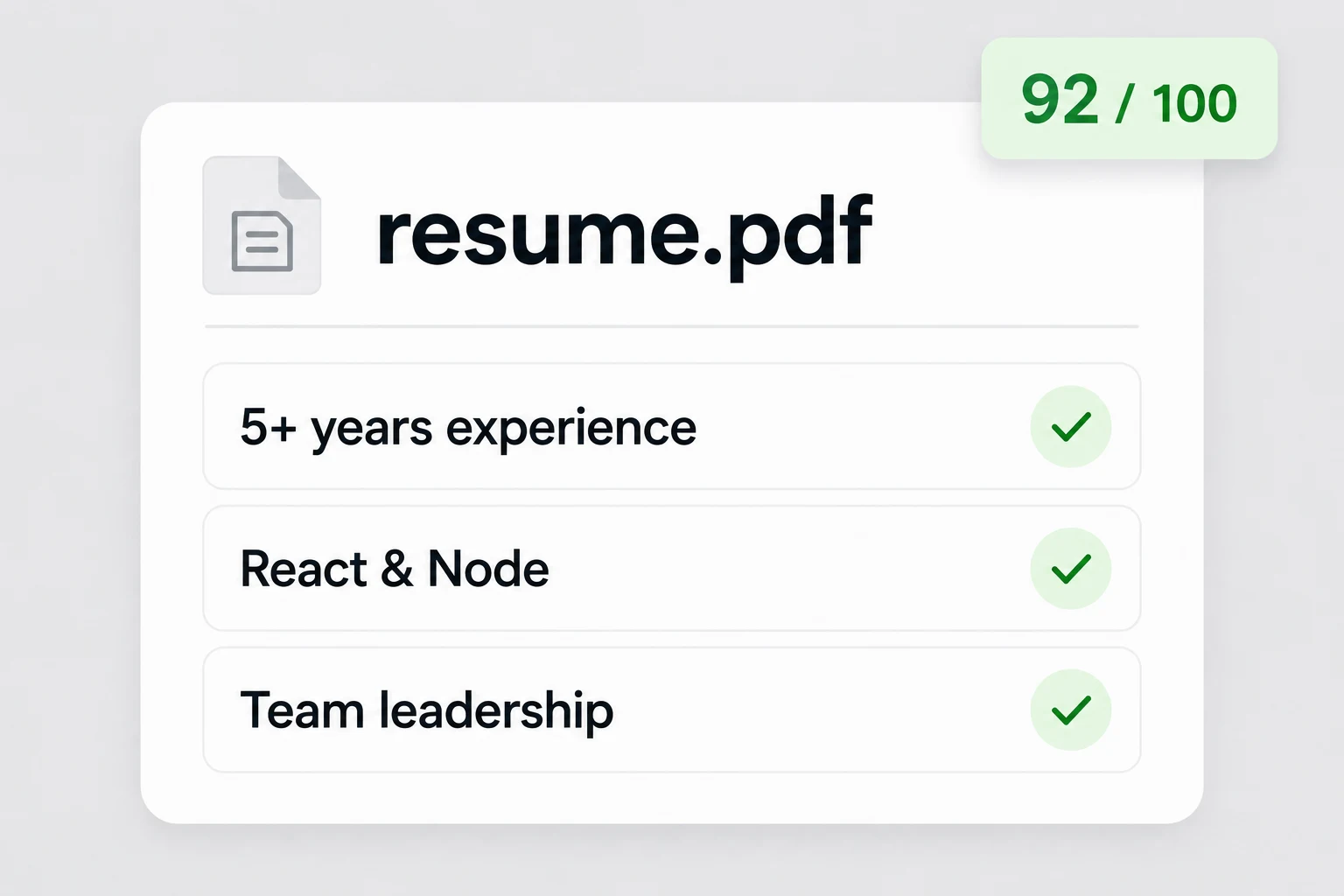
Every resume says team player and fast learner. AI resume screening ignores the adjectives and checks the facts: each of your criteria gets a verdict, met, partly met or missing, with the exact lines from the resume quoted as evidence.
- A verdict per criterion, never one mushy match percentage
- Evidence quoted line by line, auditable in seconds
- Missing a must-have caps the score, polish cannot hide gaps
Resume · Jasmine M.
6/7 met“Handled 60 tickets a day in Zendesk; managed a team of 8.”
200+
resumes scored in minutes as applications arrive
7
typical criteria per role, must-haves and nice-to-haves
6/7
reads like a verdict, because it is one
0
evenings spent skimming PDFs
How it works
Three steps, zero busywork
Set the criteria
List what the role actually requires: years with a stack, a certification, domain experience, people management. AI drafts the list from your job description; you mark which are must-haves.
Resumes arrive, scoring runs
Candidates attach a resume inside the same assessment link. AI reads each one in context and marks every criterion met, partly met or missing, quoting the lines that earned the verdict.
Verdicts join the report
The resume score rolls into the candidate's overall ranking next to tests and interviews. Click any verdict and the quoted evidence is right there.
A verdict per criterion with the resume lines that earned it, on every candidate.
Why it works
Reading, not keyword bingo
Context, not keywords
Keyword filters reject the engineer who wrote led migration off Oracle because the ad said Postgres. AI scoring reads the sentence: it can tell owning a system from mentioning one, and grades a near-miss as partly met instead of guessing.
Every verdict shows its work
No mystery match percentages. Each criterion's verdict quotes the resume lines behind it, so when a hiring manager asks why did she rank third, the answer is on screen in one click.
Must-haves mean must-have
A beautifully written resume that lacks the licence your role legally requires cannot float to the top. Missing any must-have caps the resume score, so ranking reflects requirements, not writing skill.
One signal among six
A resume is a claim; tests and interviews are proof. Resume scoring is weighted alongside the other tools on one report, so a great resume earns a look, and a great test score can beat it.
One assessment link
Mix it with the other five tools
Candidates get a single link. Every signal lands on one ranked report per candidate.
How AI resume screening works, and where it should not be trusted
What the software reads, how a verdict is reached, what it refuses to decide, and how to keep the process fair when volume is high.
01What AI resume screening actually does
AI resume screening tools read each resume against a list of requirements you wrote, and return a verdict for every requirement: met, partly met, or missing, with the lines from the resume that produced it. That is a different thing from keyword matching, which counts whether a word appears and cannot tell four years of Python from the word Python in an interests section. It is also different from a single match percentage, which averages your must-haves together with your nice-to-haves until the number means nothing.
02The names this category goes by
Automated resume screening software, AI resume screening tools, CV screening software: the labels vary and the work is the same, which is reading every application against your requirements instead of your patience. People searching for the best AI resume screening software are usually trying to separate two different products. One reads a resume against criteria you wrote and tells you which are met. The other is a resume parser, which extracts fields into a database and judges nothing. This is the first kind. A parser is useful plumbing for an applicant tracking system and it will never tell you who to interview.
03Writing criteria the software can judge
Good criteria are checkable: five years in a named stack, a specific certification, experience in a regulated industry, managed a team of any size. Poor criteria are adjectives: strong communicator, self-starter, culture fit. If a human could not settle it by reading the resume, neither can the model, and asking it to try is how you get confident nonsense. Seven criteria per role is typical, and marking three or four of them as must-haves is usually enough.
04Must-haves and how the score is capped
A missing must-have caps the score, so a beautifully written resume cannot polish its way past a hard requirement. This matters more than it sounds. Resume quality correlates with writing ability and with how many times someone has job-hunted, not with how well they will do the work. Capping on must-haves keeps a well-presented near-miss from outranking a plain resume that meets every requirement.
05Reading the evidence, not the number
Every verdict quotes the lines that earned it, and the quickest way to build trust in the tool is to spend ten minutes disagreeing with it. Open the top three and the bottom three, read the quoted evidence, and see whether you would have judged them the same way. Where you disagree, it is usually the criterion that was vague rather than the reading that was wrong. Fix the criterion and rescore.
06Where resume screening sits with the rest
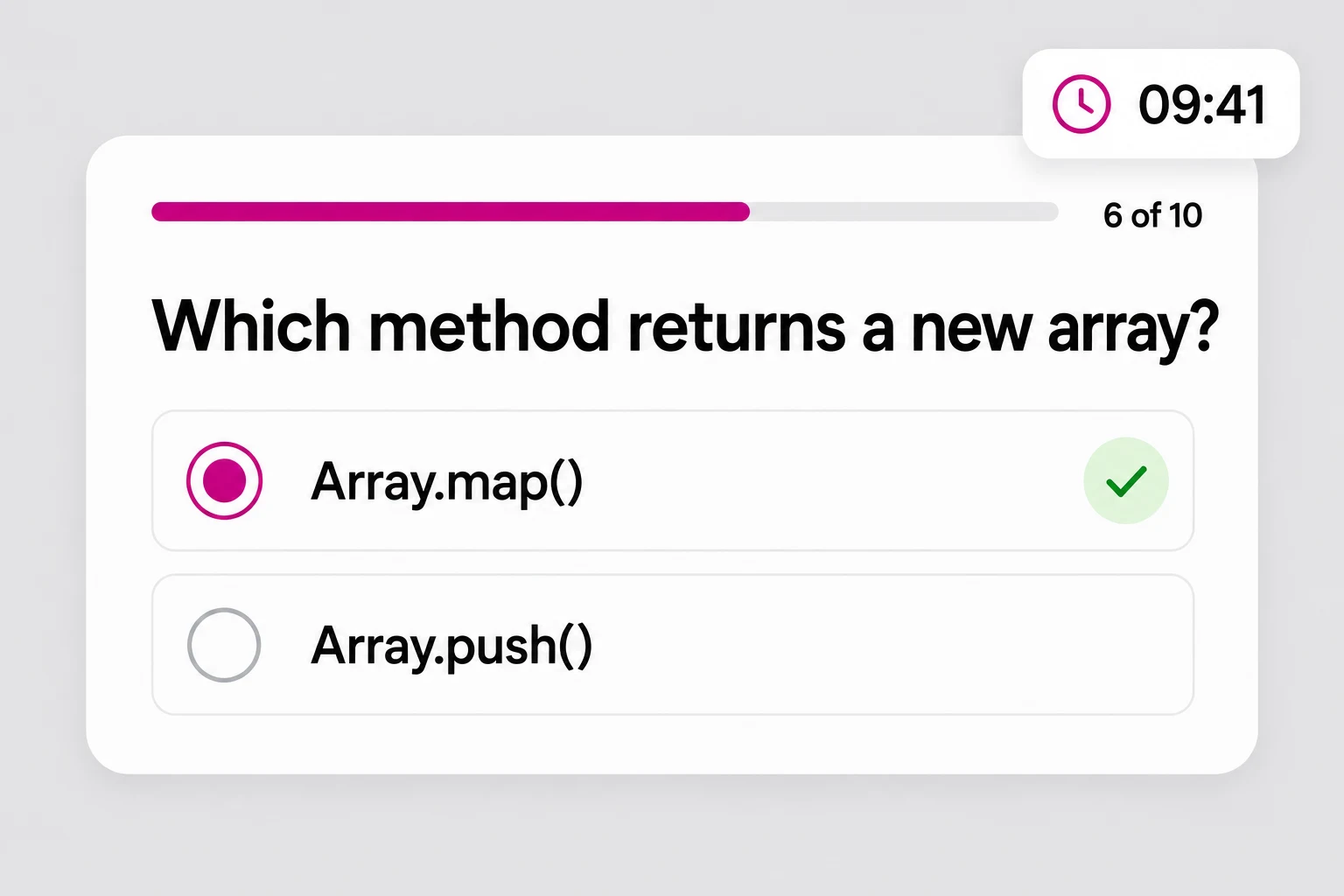
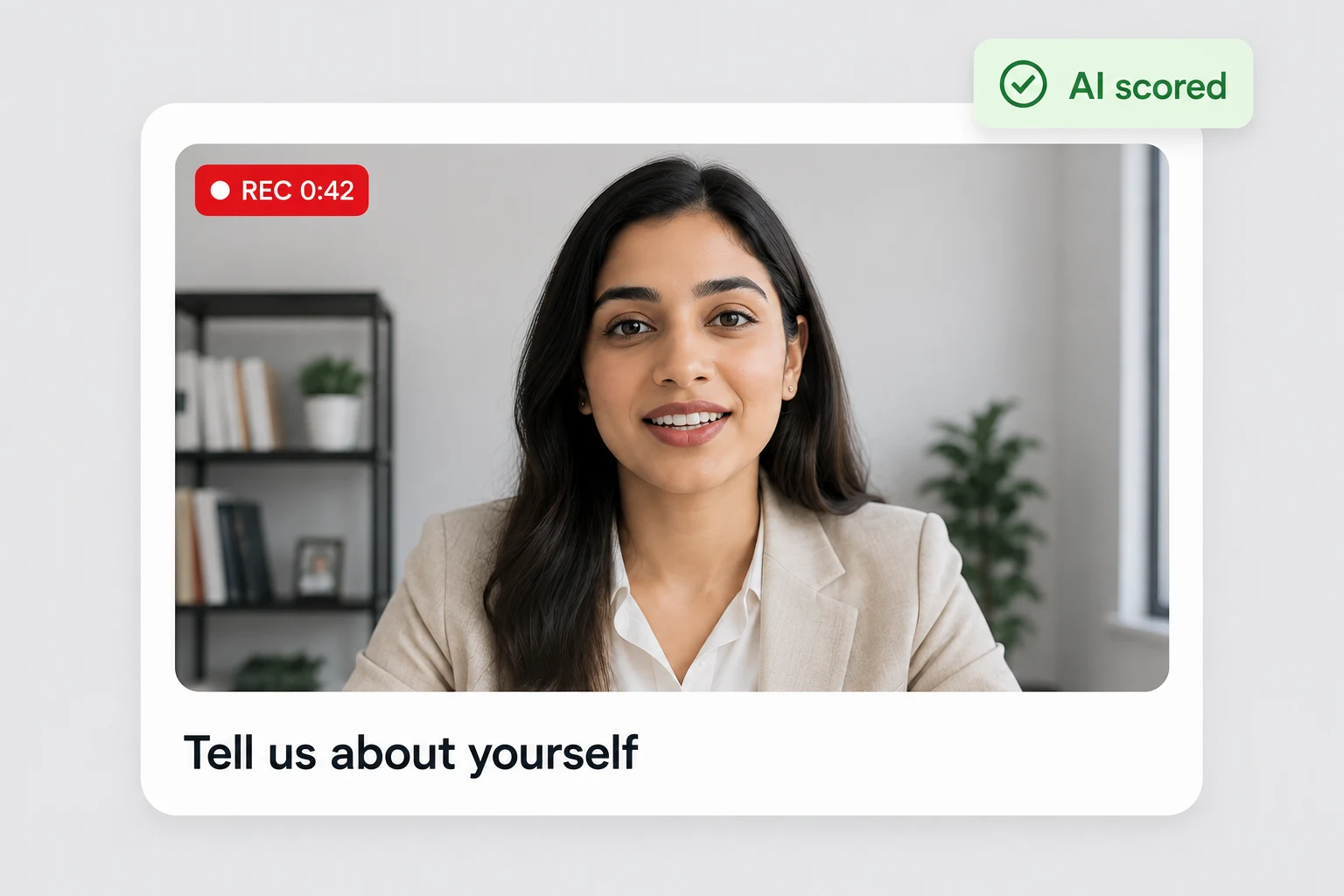
First, and never last. A resume tells you what someone has done before; a skills test tells you what they can do now, and a recorded interview tells you how they explain it. The resume score is the cheapest of the three to produce and the weakest evidence of the three, so it belongs at the top of the funnel deciding who gets tested, not at the bottom deciding who gets hired. All three land in the same report, which is what makes that ordering practical.
07Fairness, and what the tool will not do
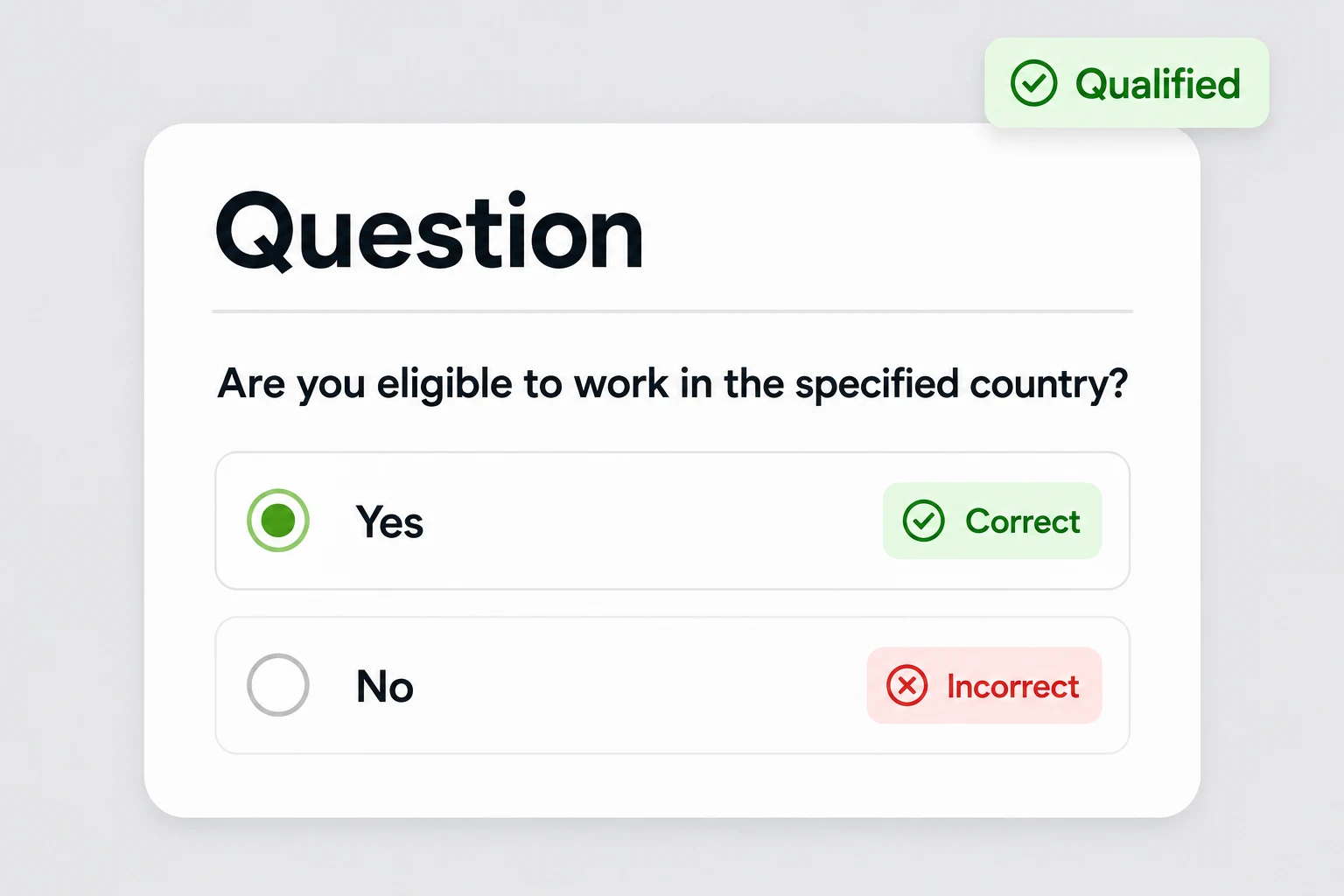
No resume score rejects anyone on its own. Only the knock-out questions you write yourself can disqualify a candidate, and those cover facts a person either satisfies or does not, such as work authorisation or notice period. Every candidate is read against the same criteria in the same way, which is more consistent than a human skimming two hundred PDFs on a Friday afternoon, and every verdict shows its evidence so a decision can be reviewed rather than assumed.
08Volume: what changes at 200 applicants
Nothing about the method, only about what you can afford to do by hand. At twenty applicants a careful recruiter can read every resume properly. At two hundred they cannot, and what actually happens is that the earliest arrivals get read closely, the middle of the pile gets skimmed, and the last ones get whatever attention is left at the end of the day. Consistent scoring across all two hundred is not a luxury at that point, it is the only way the two hundredth applicant gets the same reading as the second.
09Resumes the software finds hard
Career changers, candidates from a different industry using different words for the same work, and people whose most relevant experience is unpaid. The model reads what is written, so a resume that never states the requirement will be marked missing even when the person has it. This is another reason the resume score caps rather than decides: it is a filter for who to test, and the test is where an unusual background gets its fair hearing.
10Keeping the criteria honest over time
Requirements drift. A role advertised with five years of experience often gets filled by someone with three, and if the criteria are never revisited the screen quietly rejects the people you would have hired. Every few roles, compare who you actually shortlisted against what the criteria demanded. Where they disagree, the criteria are wrong, and correcting them is a two-minute edit that improves every future screen.
11Resume screening and the ATS keyword myth
Candidates are told to stuff their resume with keywords because that is how older applicant tracking systems worked: a literal string match, so the word had to appear or the resume was filtered out. That advice produces resumes optimised for a machine and unreadable by a human, and it punishes honest candidates who describe their work in their own words. AI resume screening software that reads against criteria breaks the cycle. Five years of Django is five years of Django whether the resume says Django, Python web framework, or names the three products they built with it.
12What a verdict looks like in practice
Take a requirement like 'has managed a team of three or more'. Met is a line saying they led a team of six. Partly met is a line saying they mentored two juniors, which is real but not the same thing. Missing is silence, nothing in the resume speaks to it either way. That third case is the one worth understanding: missing means the resume did not say, not that the candidate cannot. Plenty of strong people leave out the thing you happen to care about, which is why a missing nice-to-have should cost a few points and a missing must-have should send them to a second look rather than the bin.
13How long screening actually takes
Scoring runs as applications arrive, so by the time you open the job in the morning the overnight applicants are already read and ranked. Two hundred resumes are scored in minutes rather than over the days it would take to read them all properly by hand, and the comparison that matters is not against reading them properly, but against what really happens at that volume, which is close attention for the first arrivals and a few seconds each for the rest.
14Screening for roles with unusual requirements
The more specific the requirement, the better this works: a named certification, a regulated-industry background, a particular language, a licence. Vague seniority is where it struggles, because 'senior' means five years at one company and twelve at another. If your criteria include a judgement call like that, define it as something checkable, years in the discipline, size of team, budget owned, or accept that it will need a human read and mark it a nice-to-have rather than a must.
15Bias, and what changes when a machine reads first
Consistent is not the same as unbiased, and it is worth being precise about which one you get. Reading every resume against the same written criteria removes the drift that comes from fatigue, from order effects, and from the reader who warms to a familiar university. It does not remove bias baked into the criteria themselves: ask for a degree the job does not need, and the screen will faithfully filter out capable people who lack it. The criteria are where fairness is won or lost, and they are written by you, which is the right place for that responsibility to sit.
16Keeping a candidate's data where it belongs
A resume is the most personal document in the process, and the report treats it that way. When you share a candidate with a hiring manager, the shared view drops the contact details, your private notes and your rating, so a decision can be made without circulating someone's phone number around the company. Shared links carry an expiry you choose, and the default is not forever.
17What it costs to screen a pile of resumes
Unlike standalone ai resume screening tools, resume scoring here runs inside the same candidate link as your tests and interview questions, and a credit is spent only when a candidate completes their assessment. Uploading a resume that never leads to a completed assessment costs nothing. The free plan includes ten credits a month with no card, and paid plans start at thirty-nine dollars a month for fifty credits.
Frequently asked questions
You define criteria for the role. As resumes arrive through the assessment link, AI reads each one, marks every criterion met, partly met or missing, and quotes the supporting lines. Scores roll into the candidate's overall ranking.
No. The AI reads resumes in context. It can distinguish owning a system from mentioning it in a course list, and it grades partial matches as partly met rather than rejecting them outright.
Always. Every verdict links to the exact resume lines that earned it. If you disagree, you are one click from the evidence, and your own rating and notes sit next to the AI's.
PDF and Word documents, in the same browser flow as the rest of the assessment. Candidates upload once; nothing to install.
Resume scoring uses credits like the other AI tools. Credits are included on every plan and qualifying knock-outs run first, so you never pay to score a resume you could not hire.
Your next shortlist, on autopilot
Tests, interviews and resume scoring in one link. AI hands you a ranked shortlist.
Get started freeFree plan included. No credit card needed.