Two candidates score 90. They will not work the same.
Skill scores tell you who can do the work. They say nothing about who thrives under deadline pressure, who needs structure, who runs at ambiguity. The psychometric inventory maps working style into a trait profile that sits right next to the skill scores it explains.
- Forced-choice statements, much harder to game than agree-disagree scales
- Untimed, so candidates answer honestly instead of racing a clock
- A profile, not a pass mark: compare candidates, never auto-reject
Working style · Jasmine M.
Trait profileShown next to the skill scores it explains. Never a gate.
10 min
typical completion time, untimed by design
0
candidates auto-rejected: traits inform, never gate
1 report
traits render next to the skill scores they explain
2x
the context on every borderline hiring call
How it works
Three steps, zero busywork
Add it to the assessment
Pick it in the job's screening tools, next to tests and interviews. The inventory is role-agnostic: every candidate for the job answers the same statements.
Candidates choose, not rate
Forced-choice pairs (which is more like you?) instead of rate-yourself scales. There is no obviously right answer to perform, which is what makes the profile trustworthy.
Read the profile with the scores
The report renders traits alongside test and interview scores. A 90 who needs structure and a 90 who improvises are now visibly different hires.
Candidate A · 90 overall
Candidate B · 90 overall
Same skill score, visibly different hires. The profile tells you which one fits how your team runs.
Two candidates, same skill score, different working styles, visible before the first call.
Why it works
Signal, without the horoscope
Built to resist faking
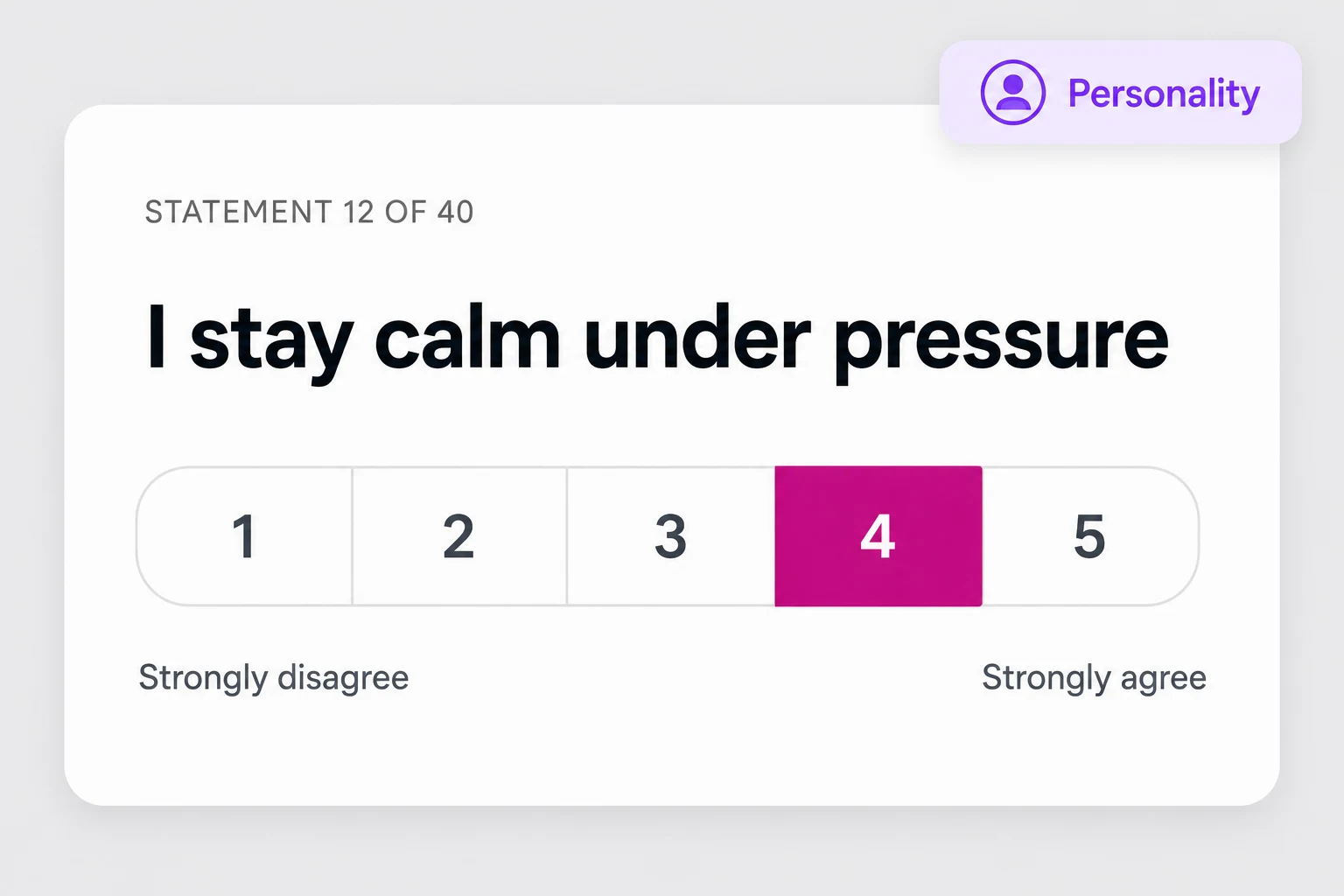
Agree-disagree scales collapse in hiring because everyone strongly agrees with I am reliable. Forced-choice pairs remove the socially obvious answer: candidates must pick between two equally flattering statements, and the pattern of picks is the signal.
Untimed on purpose
A clock turns a personality inventory into a stress test of reading speed. This one is untimed, mobile-friendly and typically done in ten minutes, so what you measure is disposition, not panic.
Traits in context, not in a vacuum
A trait profile on its own invites over-reading. On the springhire report it renders next to skill scores, interview transcripts and culture alignment, one input into a decision, sized appropriately.
Fair by structure
Every candidate gets the same inventory, scored the same way, and no trait ever auto-rejects anyone. That is a defensible process: structured, consistent, and always paired with evidence of actual ability.
One assessment link
Mix it with the other five tools
Candidates get a single link. Every signal lands on one ranked report per candidate.
How psychometric testing software fits an employer's screening process
What the inventory measures, why it is forced-choice and untimed, what a trait profile can and cannot tell you, and why it never carries a pass mark.
01What psychometric testing software does for an employer
Psychometric testing software for employers answers a question a skills test cannot: how does this person tend to work? Two candidates can score ninety on the same test and still be different hires, because one wants a plan before starting and the other starts and adjusts. The software puts a short inventory in front of every candidate for a job, scores it the same way each time, and returns a trait profile that sits on the same report as the test scores and interview transcripts. It does not decide anything on its own. It gives the hiring manager context for the decision they were already going to make, and it gives that context in a form that can be compared across candidates rather than pieced together from gut feel.
02Forced-choice versus agree-disagree
Most pre-employment personality tests use agree-disagree scales, and those collapse in a hiring setting because everyone strongly agrees with I am reliable and strongly disagrees with I miss deadlines. The candidate knows what the employer wants to hear, so the scale measures how well they read the room. A forced-choice inventory presents pairs of statements that are both socially acceptable and asks which is more like you. Finish work early or finish work thoroughly. Lead the discussion or make sure everyone is heard. There is no flattering answer to reach for, so the pattern of choices across the whole inventory is what carries the signal. That is why springhire uses forced-choice pairs and not rating scales for its psychometric test.
03Why the inventory is untimed
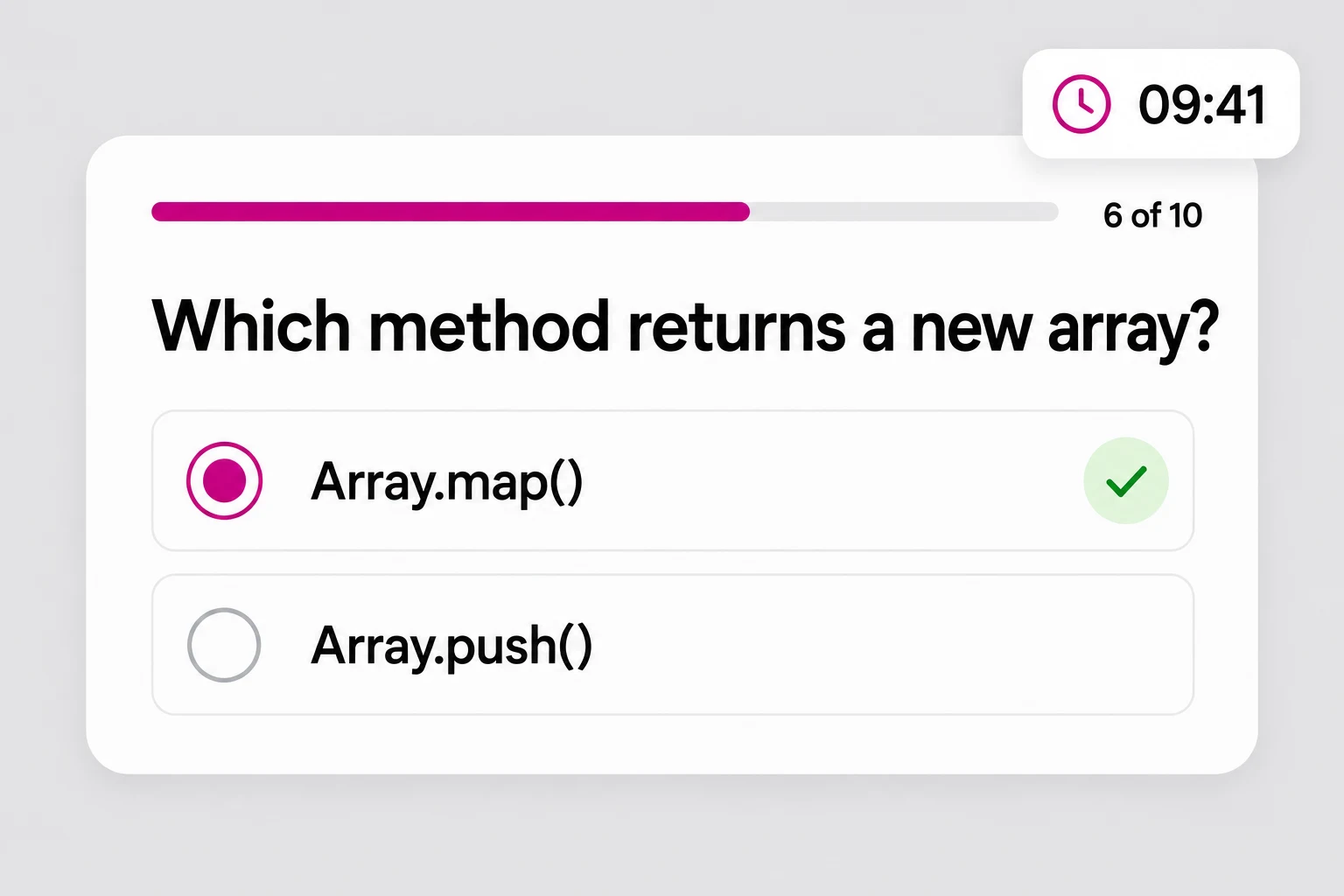
A clock on a personality inventory measures the wrong thing. Timed, it becomes a test of reading speed and composure under pressure, and candidates who read slowly, or who read in a second language, produce a profile that reflects the time limit rather than their disposition. Untimed, candidates can read each pair properly and pick the one that is actually more like them. Most people finish in about ten minutes anyway, because there is nothing to work out, only a choice to make. Untimed also removes the excuse that the profile was rushed, which matters when a hiring manager and a candidate later talk about what it shows. The skills tests on the same report are timed; the psychometric inventory is deliberately not.
04What a trait profile can and cannot tell you
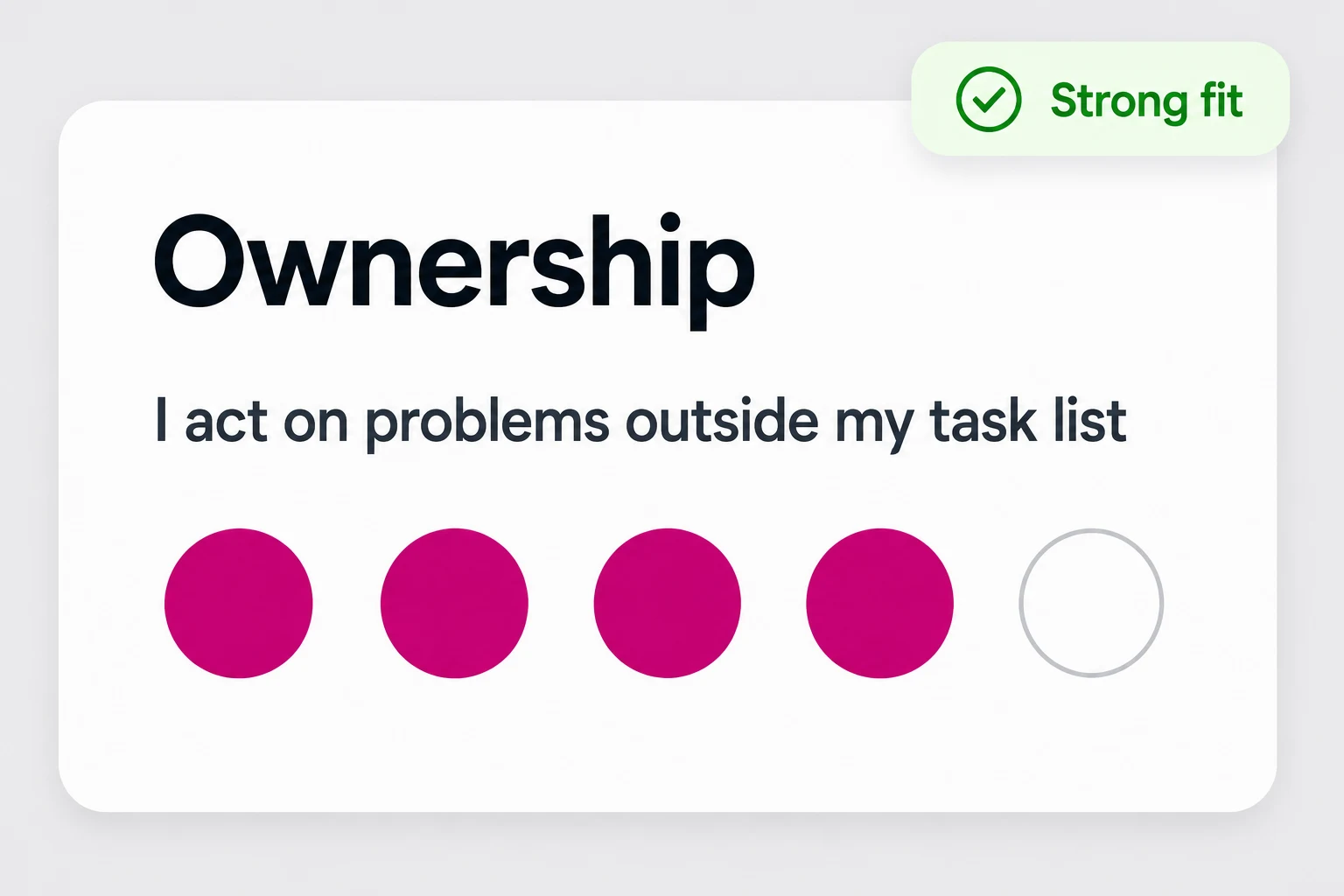
A trait profile describes tendencies: how a candidate leans on structure, pace, ownership, collaboration and pressure. It can tell you that one finalist prefers a defined brief and another prefers open problems, which is useful when you know which kind of work the role actually contains. It cannot tell you whether someone will be good at the job, whether they are honest, or how they will behave on a bad day. Anyone who claims a pre-employment personality test predicts performance on its own is selling something. Treat the profile as a description of working style to be checked in conversation, not as a forecast. The right follow-up to a surprising trait is an interview question, not a decision.
05Reading traits next to skills scores
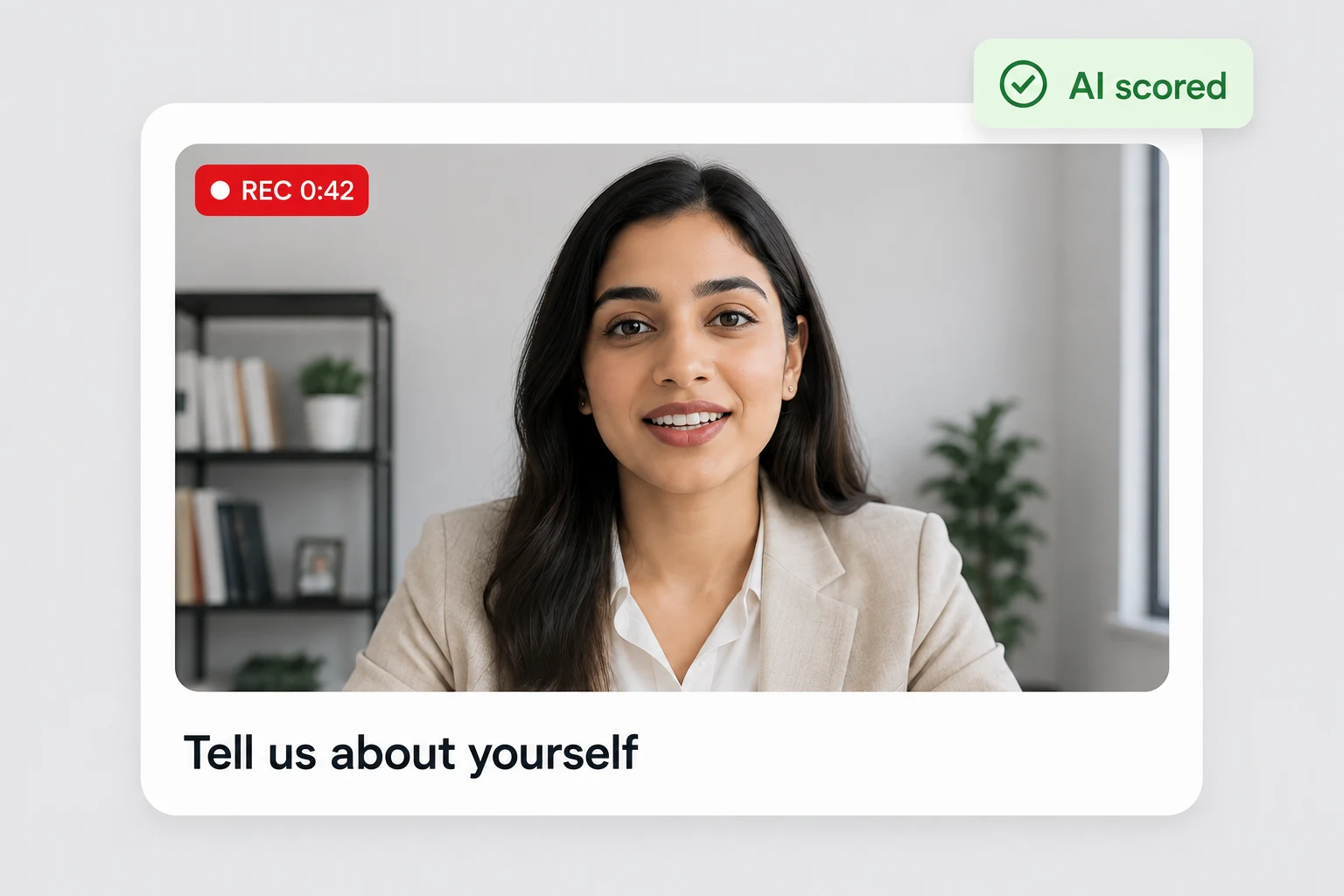
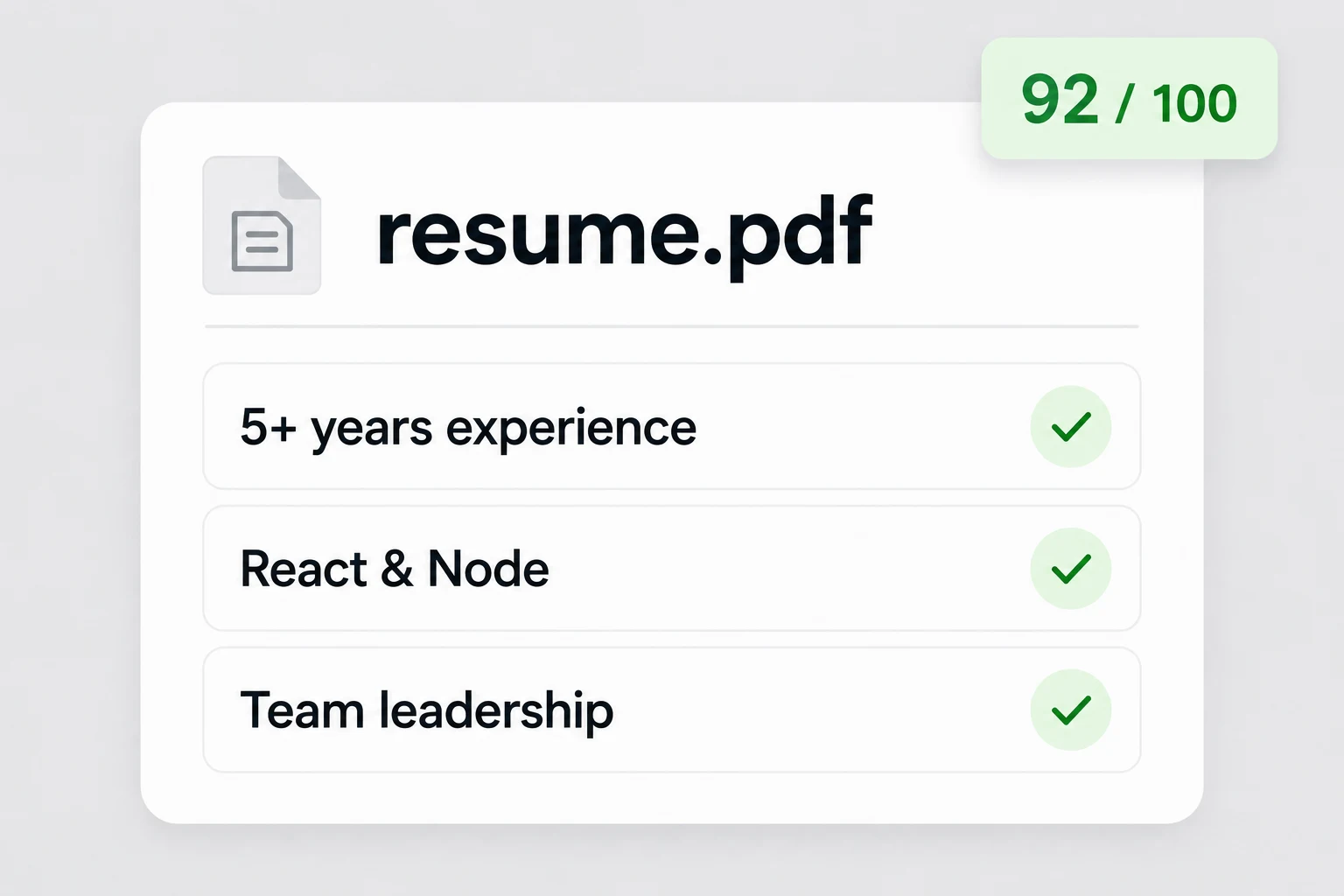
The profile is designed to be read alongside evidence of ability, never instead of it. On the springhire report the trait profile renders next to the skills test scores, the interview transcripts and the resume verdicts for the same candidate. That placement is the point. A high test score with a profile that leans towards structure and a high test score with a profile that leans towards improvisation are two different hires for a role, and which one is better depends on the team they would join. Start from the ability evidence to decide who is capable, then use the profile to decide who fits the work. The test library at /test-library/ is where the ability side comes from; the psychometric inventory adds the how.
06Never a pass mark
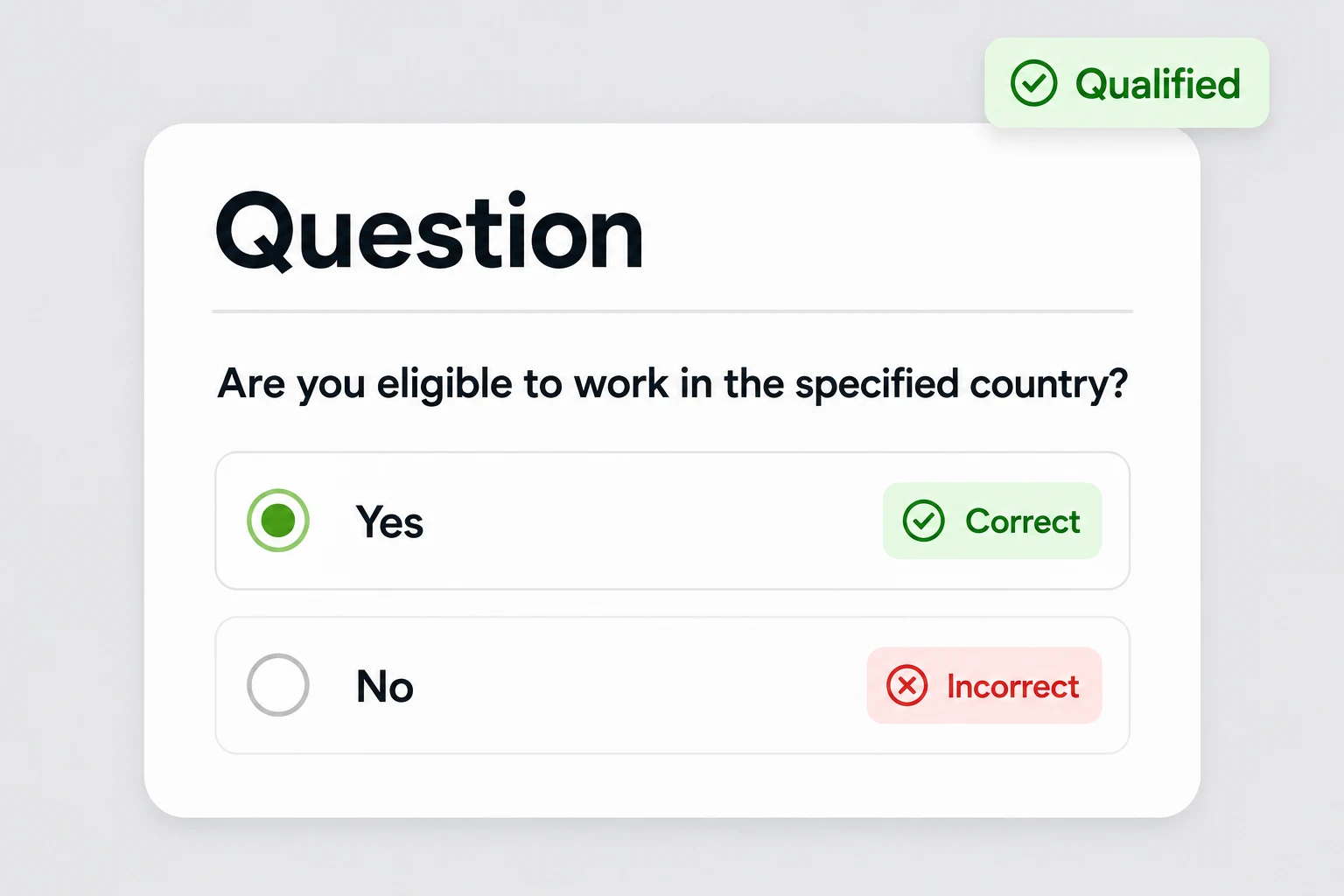
There is no passing score on the psychometric test and there never will be. No trait knocks a candidate out, no profile lowers their rank automatically, and nothing on the trait side can trigger a rejection. The only automatic rejection anywhere in springhire comes from the knock-out questions you write yourself, and those cover facts such as work authorisation and notice period. This is deliberate. Personality inventories have a long history of being used as a filter, and that use is hard to defend when a candidate asks why they were rejected. A profile that informs a human decision is defensible. A profile that makes the decision is not, so the software does not allow it.
07Fairness and consistency
Fairness in psychometric testing comes from three things, and the software enforces all of them. Every candidate for a job answers the same inventory, in the same format, with the same untimed conditions. Every inventory is scored by the same method, so the profile does not depend on who read it or when. And the profile is always shown alongside direct evidence of ability, so it can never be the only thing a decision rests on. What the software cannot do is stop a hiring manager over-reading a trait, which is why the report keeps the profile in proportion rather than putting it at the top. If a trait ever appears to be doing the work of a requirement, write the requirement as a knock-out question or a test instead.
08When to add it to a job
Add the psychometric test when working style is a genuine part of the role and you can say what you are looking for before you see the profiles. Roles where the same skills are needed in very different environments benefit most: a support agent on a quiet product team and one on a high-volume queue need similar skills and different dispositions. Add it late in the funnel rather than early, after knock-out questions and skills tests have reduced the pile to people who can do the work, so the profile is read for finalists rather than for everyone. Skip it for roles where you cannot articulate what a good profile looks like, because a profile you have no way to interpret is noise on the report.
09What it costs
The psychometric test is one of the six screening tools and is priced the same way as the rest: a credit is spent only when a candidate completes it. Inviting a candidate costs nothing, a candidate who abandons costs nothing, and a candidate knocked out by a qualifying question before reaching the inventory costs nothing. The free plan includes ten credits a month with no card, and paid plans start at thirty-nine dollars a month for fifty credits, with top-ups at seventy cents a credit. Because knock-outs and skills tests usually run first, the inventory is typically completed by a smaller group of shortlisted candidates, so its share of the credit spend is small. Full details are at /pricing/.
10Compared with buying a standalone personality test
A standalone pre-employment personality test gives you a separate login, a separate candidate link, a separate report, and a separate invoice, and then leaves you to line the profile up against test scores and interview notes that live somewhere else. Psychometric testing software for employers that is built into the screening flow removes all of that. The candidate clicks one link and does the knock-out questions, the skills test, the recorded interview and the inventory in one sitting, and the employer opens one report at /sample-report/ that shows all of it together. The inventory itself is not more magical than a standalone one. What is better is that it arrives next to the evidence it is supposed to qualify, and that no one has to reconcile two systems to read it.
Frequently asked questions
Working-style traits: how a candidate approaches ownership, pace, structure, collaboration and pressure. It adds context to skill scores and never acts as a pass-fail gate.
No. It is untimed by design, so candidates answer honestly rather than racing. Most finish in about ten minutes.
It is much harder than usual. The inventory uses forced-choice pairs where both options are socially acceptable, so there is no obvious right answer to perform.
Never. Trait profiles inform your read of a candidate; they carry no pass mark and trigger no knock-outs. Only qualifying questions can disqualify automatically, and only on rules you set.
Used the way springhire uses it, yes: identical inventory for every candidate, no auto-rejection, and always shown alongside direct evidence of ability like tests and interviews. It adds context; it never replaces proof.
Your next shortlist, on autopilot
Tests, interviews and resume scoring in one link. AI hands you a ranked shortlist.
Get started freeFree plan included. No credit card needed.